

Fire Hydrant Clearance Requirements in Maryland
By Sidney Sogbor, Chief Executive Officer, Seadmok Water Construction LLC | Published November 17, 2026 | Last updated November 17, 2026
- Keep at least 3 feet (36 inches) of open ground all the way around every fire hydrant.
- Maryland enforces NFPA 1, the 2024 edition, as its statewide fire code. NFPA 1 sets the 36-inch rule.
- No posts, fences, shrubs, trash cans, vehicles or snowbanks inside that zone.
- Drivers in Maryland may not park within 15 feet of a hydrant.
- Your local fire marshal can require more space. Ask before you build or plant.
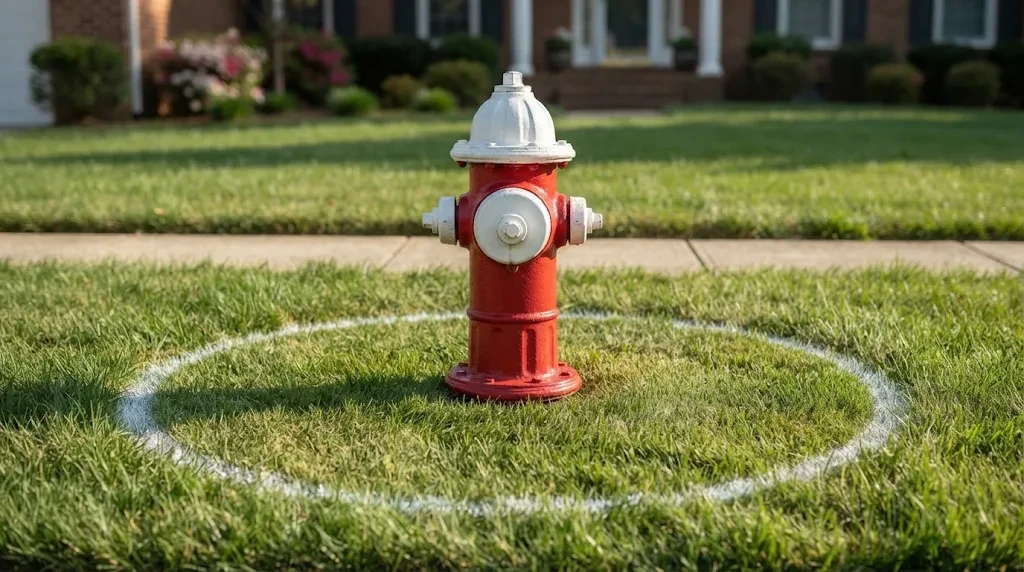
The short answer: fire hydrant clearance requirements in Maryland call for a 36-inch clear space around the full circumference of the hydrant, with nothing placed in that zone that could slow firefighters down. That's the floor. Local rules, outlet direction and snow can all push the real number higher.
Fire hydrant clearance is one of those rules most people only learn about after a notice shows up on the door. We install, repair and inspect hydrants across Maryland, and the most common problem we find isn't a broken valve. It's a hydrant hidden behind a hedge.
Here's what the codes actually say, what counts as an obstruction, and how to keep a hydrant on your property compliant without giving up your landscaping.
How much clearance around a fire hydrant does the code require?
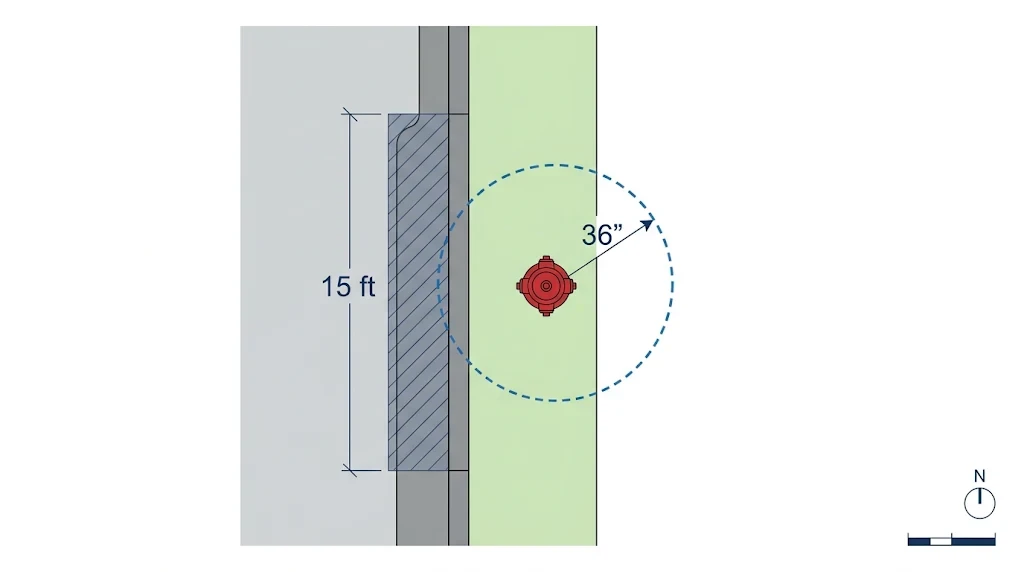
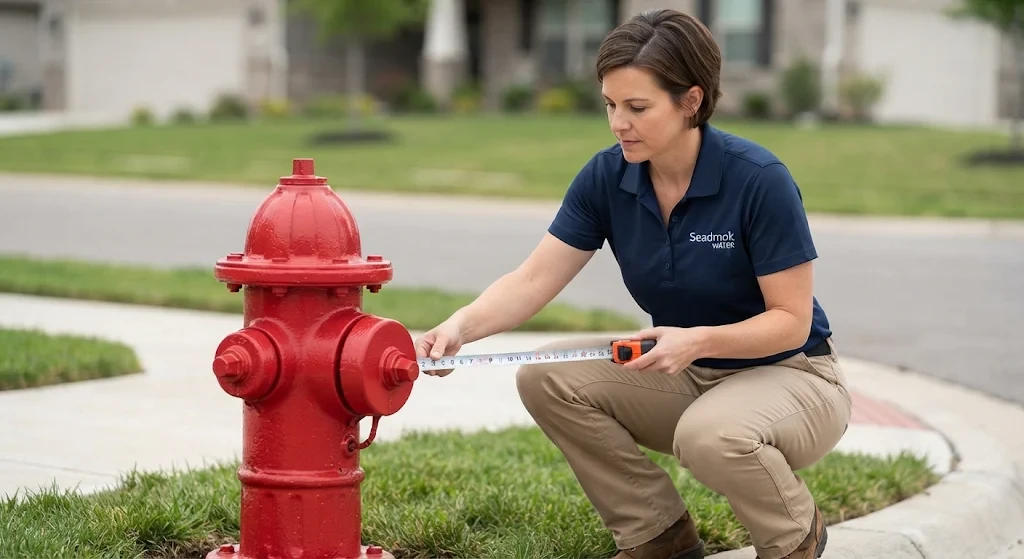
The code requires a 3-foot (36-inch) clear space around the full circumference of a fire hydrant. Both major model codes agree on that number.
- NFPA 1 (the Fire Code published by the National Fire Protection Association) requires a 36 in. clear space around the circumference of fire hydrants.
- The International Fire Code (IFC) says the same thing in Section 507.5.5: "A 3-foot (914 mm) clear space shall be maintained around the circumference of fire hydrants except as otherwise required or approved."
Think of the clear space like the swing path of a car door. You don't just need room for the door to exist. You need room for it to open, plus room for a person to step through. Firefighters need to swing a hydrant wrench, connect hose to every outlet and pull that hose toward the fire apparatus.
The phrase "except as otherwise required or approved" matters. It gives the fire code official room to ask for more.
| Requirement | Distance | Source |
|---|---|---|
| Clear space around the hydrant | 36 in. (3 ft) | NFPA 1; IFC 507.5.5 |
| No parking or standing near a hydrant (Maryland) | 15 ft | Maryland Transportation Article 21-1003(m) |
| Shoveled clearing after snow (Howard County) | 3 ft plus a path to the street | Howard County Adopt-A-Hydrant |
Why does a fire hydrant clear space matter in the first minutes of a fire?
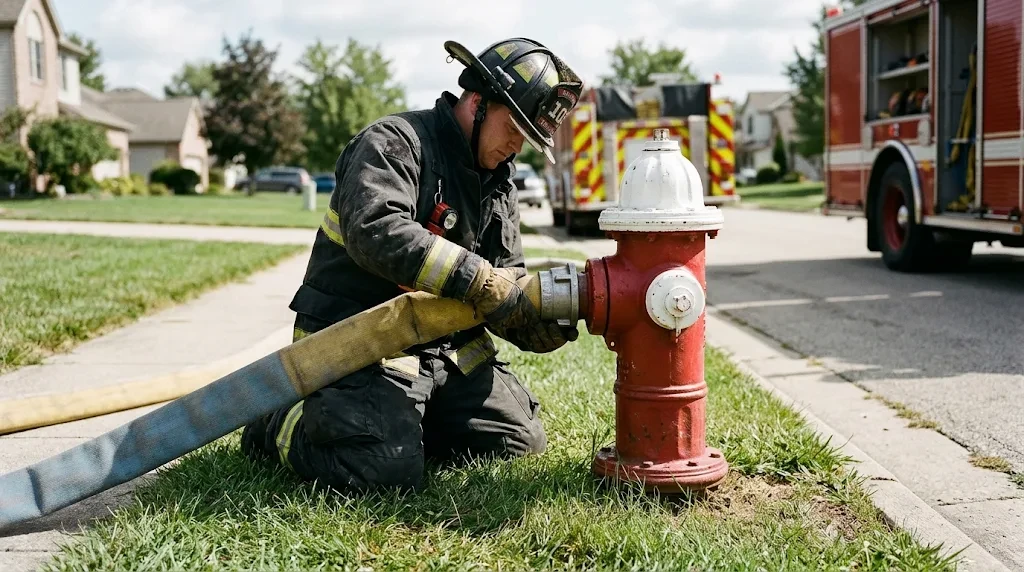
Fire hydrant clear space matters because every second spent finding or reaching a hydrant is a second the fire keeps growing. Fire department access to the hydrant is what turns a tank of water on the fire apparatus into a steady supply.
That connection usually goes to the pumper connection (the big outlet, sometimes called the steamer port, that usually faces the street). A hedge on that side, or a parked car at the curb, can force the crew to use a smaller outlet or find another hydrant down the block.
We explain how the water gets from the main to that outlet in our walkthrough of how fire hydrants work. The short version: the hydrant can only deliver what the crew can reach.
Which fire hydrant code requirements apply in Maryland?
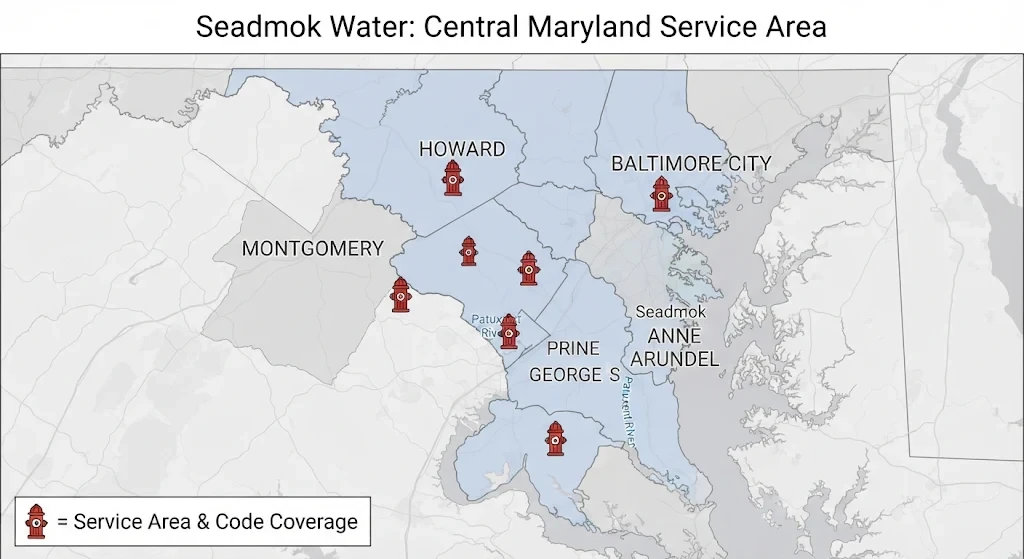
Maryland's fire hydrant code requirements start with NFPA 1, which the State Fire Prevention Code adopts in its 2024 edition, effective June 23, 2025.
The state amendments we reviewed don't change the hydrant section, so the 36-inch rule stands.
Three layers apply to most properties we work on:
- State fire code (NFPA 1). Sets the clear space and bans obstructions. The State Fire Marshal and local fire marshals enforce it.
- State traffic law. Under Maryland Transportation Article 21-1003(m), "A person may not stand or park a vehicle within 15 feet of a fire hydrant."
- Local rules. Counties and cities can add their own amendments, sign standards and enforcement. The local fire marshal's office is the final word for your address.
If you're outside Maryland, your jurisdiction probably uses the International Fire Code instead. The IFC and NFPA 1 land on the same 3-foot figure, so the practical advice below still holds.
What counts as a fire hydrant obstruction?
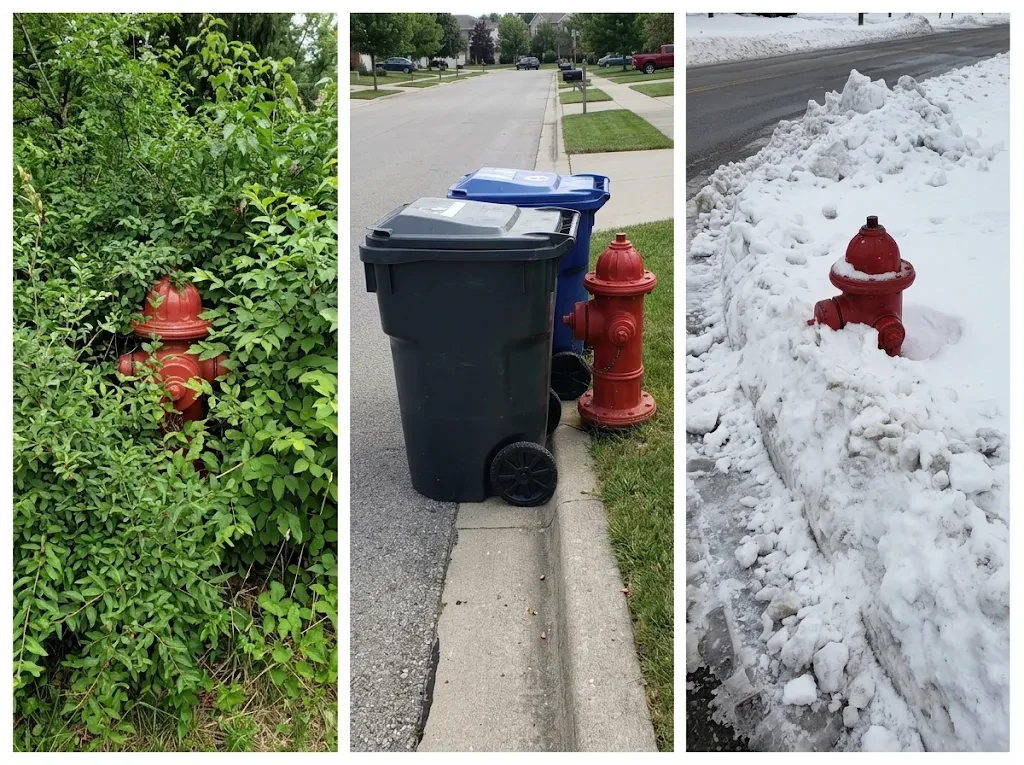
A fire hydrant obstruction is anything that blocks firefighters from seeing, reaching or using the hydrant.
NFPA 1 bars any "post, fence, vehicle, growth, vegetation, trash or storage of other materials" that would hinder the hydrant.
The obstructions we see most often on Maryland jobs:
- Shrubs and ornamental grasses that grow into the 3-foot circle by midsummer.
- Decorative rocks, edging and raised beds that turn the hydrant into a garden feature.
- Trash and recycling bins parked next to the hydrant on collection day.
- Mailboxes, signs and light posts set too close during a driveway project.
- Parked cars, trailers and dumpsters, especially on construction sites.
- Snowbanks from plows and driveway shoveling.
The IFC wording is broad on purpose. Section 507.5.4 says unobstructed access "shall be maintained at all times," because fire department access can't wait for a cleanup.
If you have to ask whether something blocks the hydrant, treat it as a fire hydrant obstruction and move it.
Can I plant around a fire hydrant?
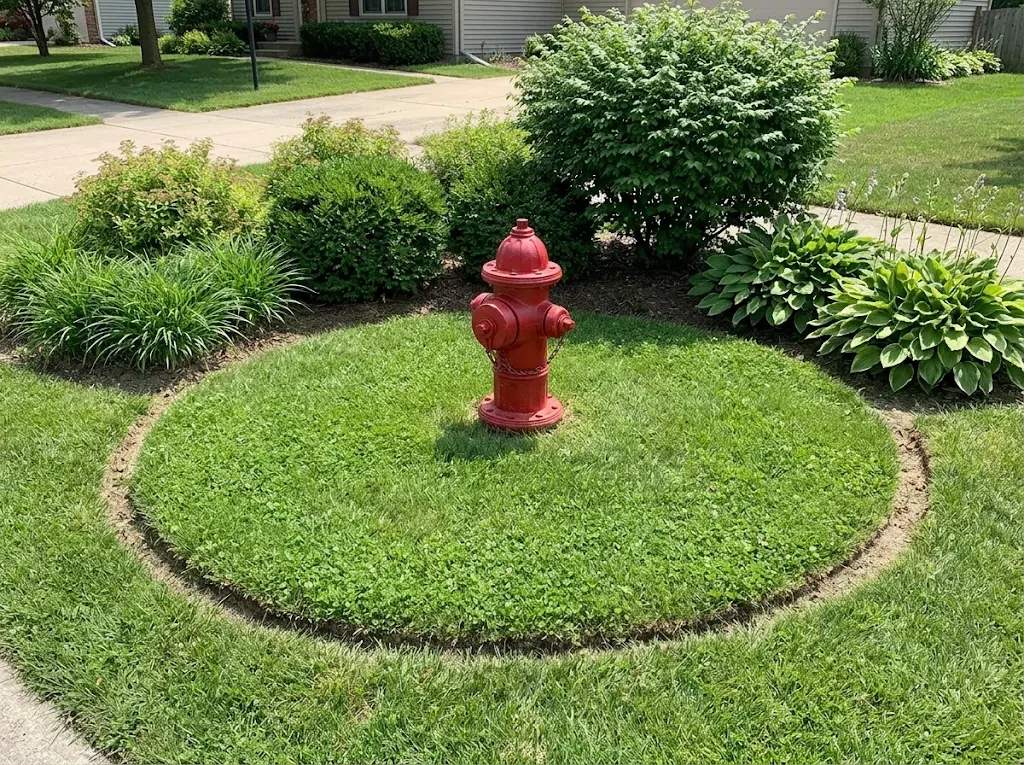
Yes, you can plant around a fire hydrant, as long as nothing grows into the 3-foot clear space or hides the hydrant from the street. Low grass is usually fine. Shrubs, trees and tall perennials belong outside the circle.
California fire districts publish some of the most detailed landscaping guidance. The City of Woodland's hydrant clearance guideline is a good model even for Maryland yards:
- Keep groundcover near the hydrant 12 inches tall or less.
- Keep shrubs next to the hydrant no taller than half the hydrant's height.
- Keep trees and shrubs from growing into the 3-foot zone.
- Don't let large shrubs block the view from the street.
Those numbers are a California guideline, not Maryland law. We still use them as our rule of thumb for landscaping around fire hydrant sites, because they stay compliant almost everywhere.
Plan for full size, not planting size. A boxwood that looks tidy at 2 feet wide can fill the whole clear space in four or five seasons. And never pile mulch or soil against the barrel. Sacramento Metro Fire's guideline keeps the hydrant flange at least 2 inches above finished grade.
How close can a fence near a fire hydrant be?
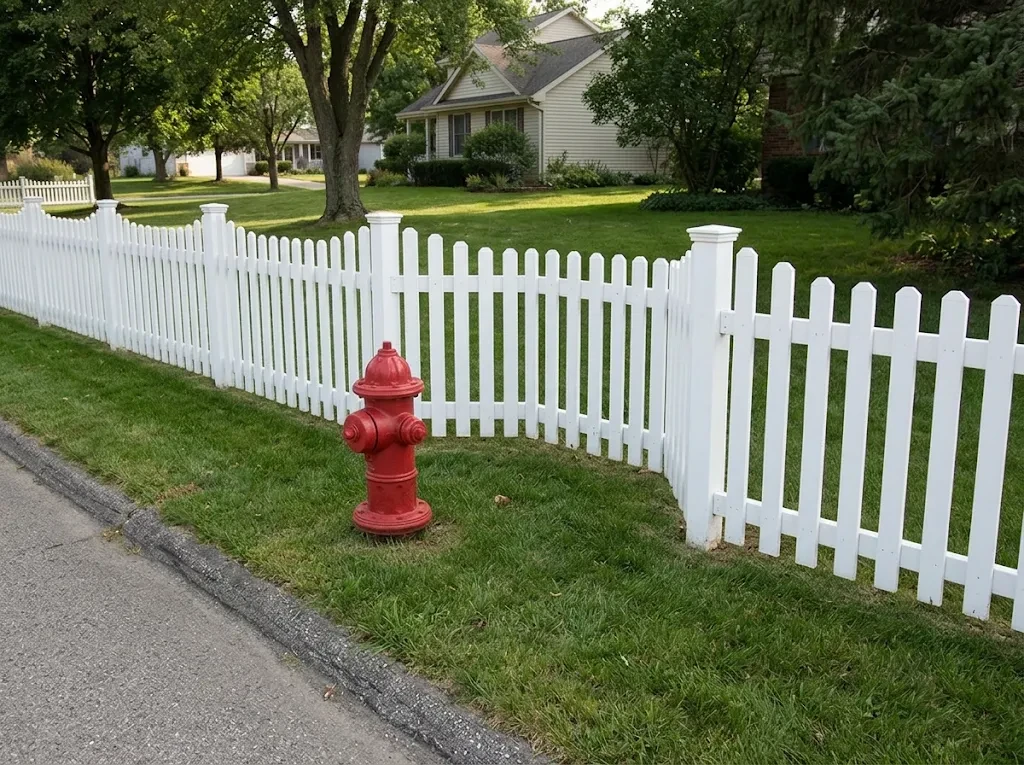
A fence near a fire hydrant needs to stay at least 3 feet from the hydrant on every side, and it can't sit between the hydrant and the street. That's the same clear space rule, applied to a fixed structure.
Most fences near fire hydrant problems we see aren't about distance, though. They come from fencing the hydrant inside the yard. A hydrant behind a locked gate is technically there, but useless at 2 a.m.
Our practical advice for a fence project:
- Mark the hydrant and a 3-foot setback before the fence crew digs post holes.
- Keep the hydrant on the street side of the fence line.
- If the fence has to wrap around it, notch the fence so the 3 feet stays open on all sides.
- Call the local fire marshal if the hydrant sits right on the property line. Get the approval in writing.
Who handles shoveling snow around a fire hydrant?
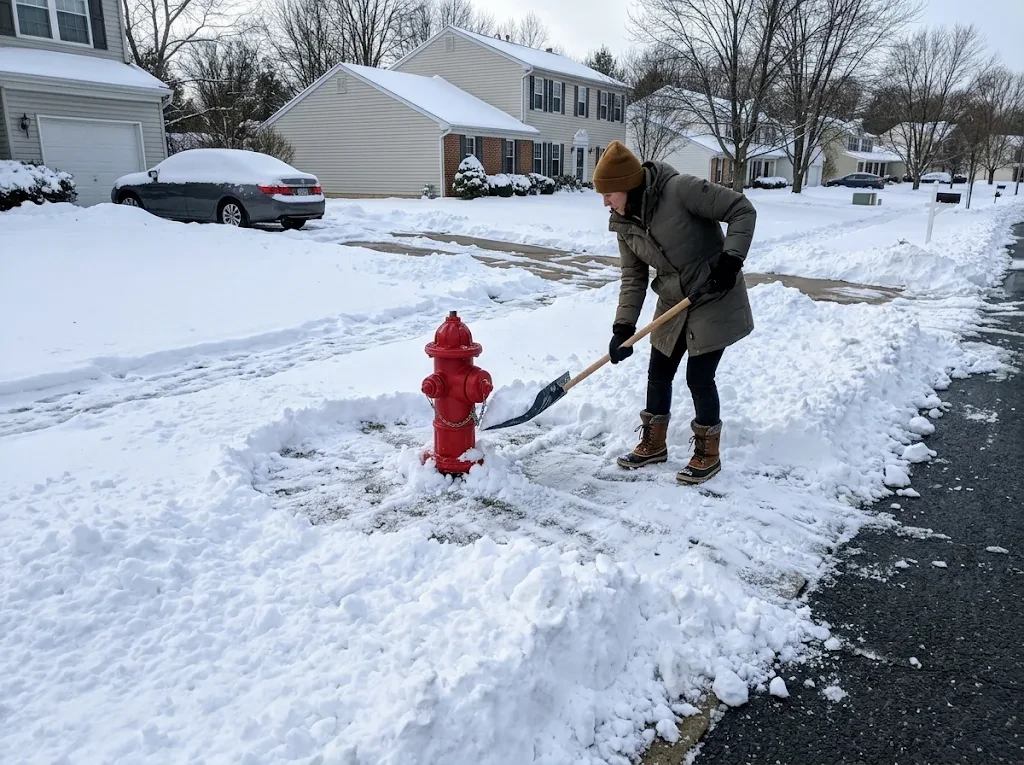
Snow removal around a hydrant usually falls to the nearest neighbors and the property owner, because crews can't dig out thousands of hydrants after every storm. WSSC Water alone has about 46,700 fire hydrants in its system.
Howard County Fire and Rescue runs an Adopt-A-Hydrant program that asks residents to clear 3 feet around a hydrant and shovel a small path to the street. That's the right target in any Maryland county.
Tips for shoveling snow around a fire hydrant:
- Make the hydrant part of your snow removal routine, and dig it out before the driveway. Plows often bury it again on the next pass.
- Clear all the way down to the caps, including the street-facing pumper connection.
- Don't throw snow on a neighbor's hydrant while clearing your own walk.
- Add a hydrant marker (a tall flexible flag or rod) if your street gets heavy drifts.
When does a hydrant need a bollard?
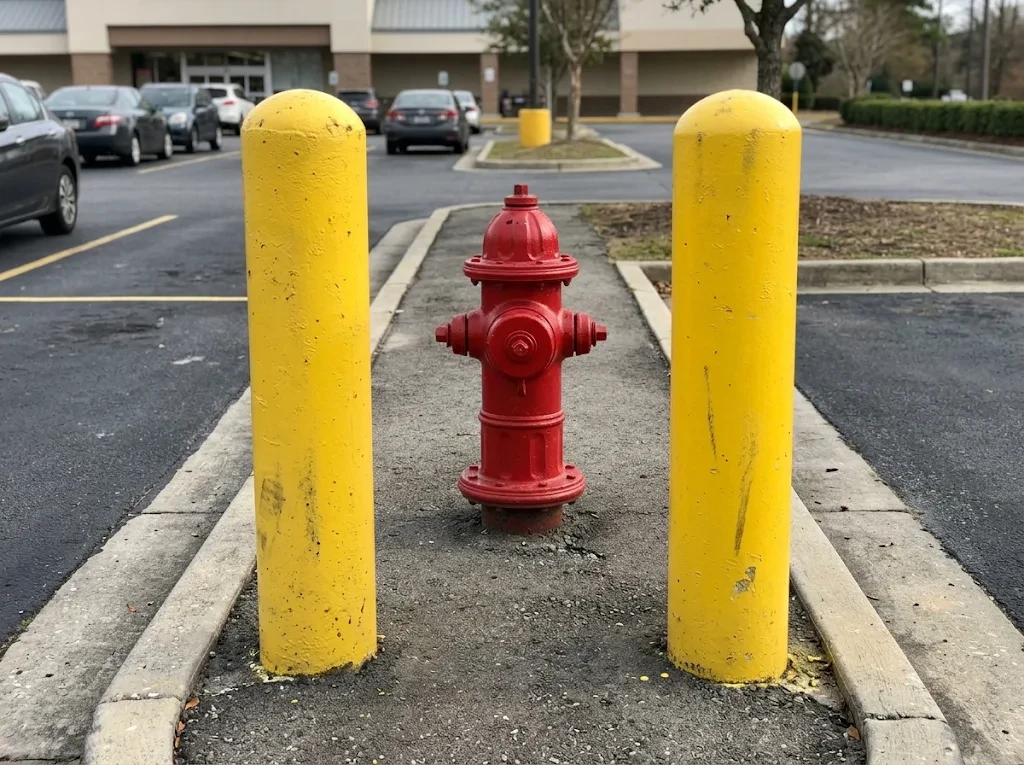
A hydrant needs a bollard (a short steel post, often filled with concrete) when vehicles could hit it.
IFC Section 507.5.6 requires guard posts or another approved method wherever a hydrant is "subject to impact by a motor vehicle."
Parking lots, loading docks and drive-throughs are the usual suspects. A hydrant knocked over by a delivery truck can flood the lot and leave the building without a water supply until it's fixed. If that's already happened, see our steps for handling a burst fire hydrant, or book emergency fire hydrant repair.
Bollards themselves can become obstructions. Set them so firefighters can still swing a wrench and connect hose on every outlet.
Sacramento Metro Fire's clearance diagram shows the usual pattern: 4-inch concrete-filled posts placed outside the working area.
What do private hydrant owners and HOAs need to do?
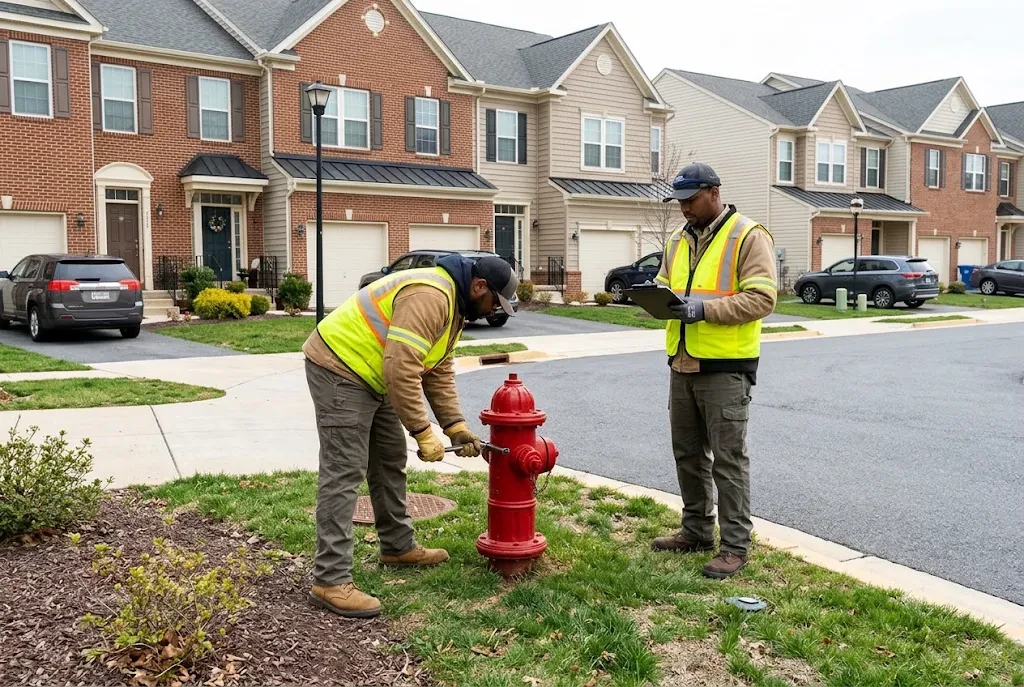
Private hydrant owners, including a homeowners association (HOA), carry the full duty to keep their hydrants clear, working and inspected. A private hydrant is one that sits on a private fire service main, the water line that runs from the public main into a campus, shopping center or community.
NFPA 24, the standard for private fire service mains, governs how those lines and hydrants get installed. If your homeowners association is adding a hydrant, the design follows NFPA 24 and the local fire marshal's review. Our fire line installation and fire hydrant installation crews plan the clear space from day one.
NFPA 25 then sets the inspection and maintenance schedule once they're in service. Clearance is part of every fire hydrant inspection: the inspector checks for obstructions, damage and drainage, while flow testing measures the water itself.
Here's our opinion: we'd treat 3 feet as the bare minimum on private property, not the goal. Trucks, snow and landscaping crews all shrink that space over a year. Starting with 4 or 5 feet gives you margin.
Seadmok inspects, maintains and repairs private hydrants for property managers and HOAs across Maryland. Request a free hydrant assessment or see our private fire hydrant maintenance service.
For a deeper look at the maintenance side, read our guide to fire hydrant maintenance and repair.
What happens if your hydrant is blocked?
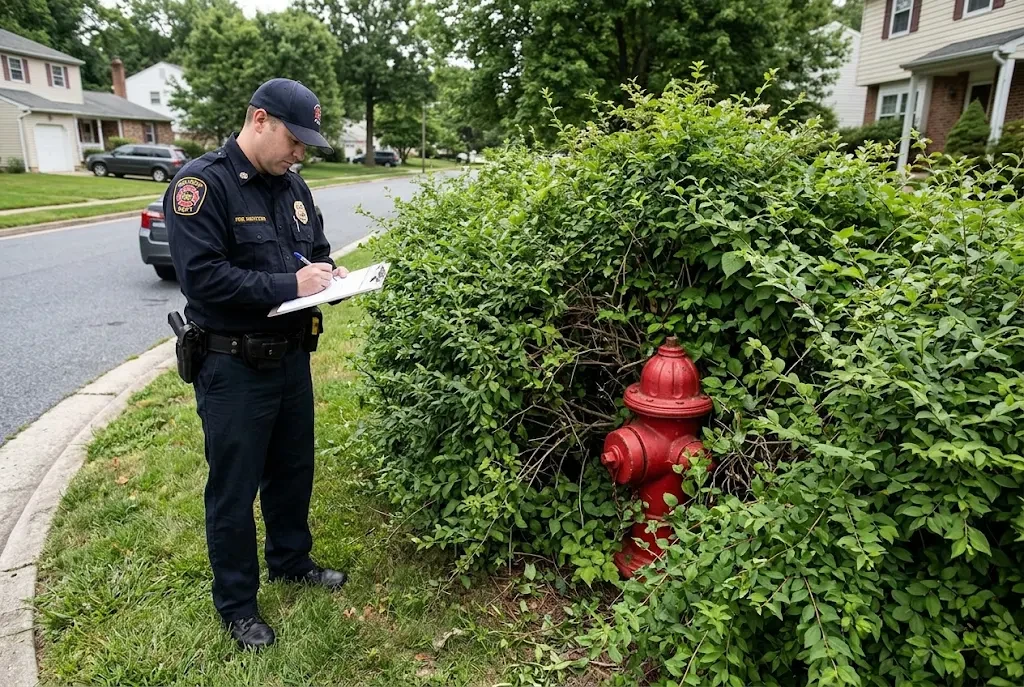
A blocked hydrant is a code violation, and the fire code official can order you to clear it. Most notices give a deadline to fix the problem; repeat or ignore violations can bring fines under local rules. A car parked within 15 feet of a hydrant can be ticketed or towed.
The real cost shows up during a fire. If firefighters can't use the closest hydrant, they lose time laying hose from the next one. That delay is the whole reason the rule exists.
If you get a notice, here's how we'd handle it:
- Read the notice closely. Note the deadline and the exact problem named.
- Clear the 3-foot zone and the line of sight from the street.
- Check the hydrant itself. Look for leaks, missing caps or a cracked barrel, and call for hydrant repair if you find one.
- Photograph the fix with a date stamp.
- Call the fire marshal's office to confirm it's closed out.
If the hydrant is past repair, our fire hydrant replacement planning guide explains what happens next, and our fire hydrant replacement service handles the work.
One honest caveat: we're a fire hydrant contractor, not a code authority. This guide reflects the model codes and the Maryland sources we checked in November 2026. Your local fire marshal has the final say for your property.
Frequently asked questions about fire hydrant clearance
How far do you have to park from a fire hydrant in Maryland?
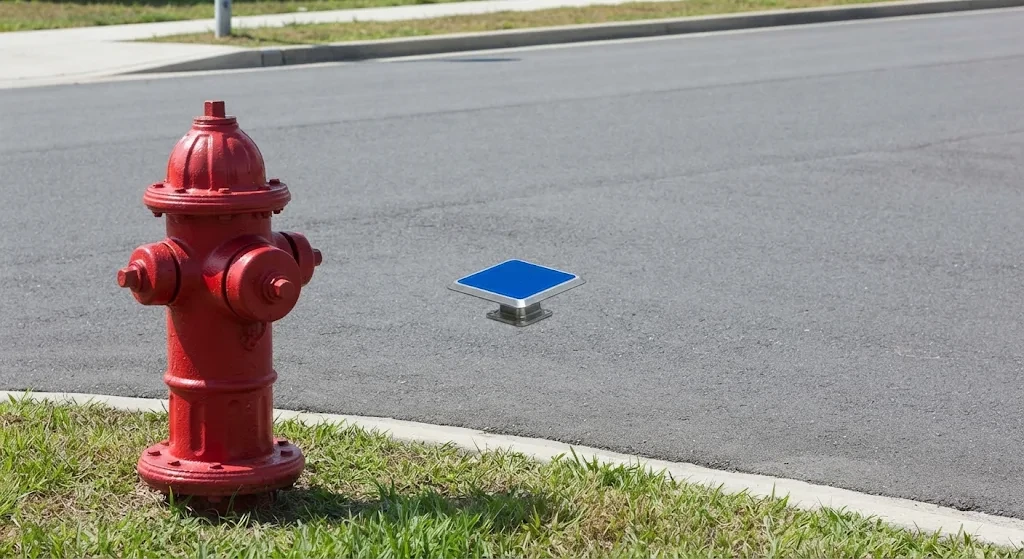
You have to stay at least 15 feet away. Maryland Transportation Article 21-1003(m) bars standing or parking a vehicle within 15 feet of a fire hydrant. The rule applies even when the curb isn't painted, and parking closer can mean a ticket or a tow.
Is it illegal to block a fire hydrant on private property?
Yes. NFPA 1 bars any post, fence, vehicle, growth, vegetation, trash or stored material that would obstruct a hydrant, on public or private land. The property owner keeps the 36-inch clear space open, and a fire code official can order it cleared by a set date.
Can a mailbox or fence near a fire hydrant stay where it is?
It can stay if it sits outside the 3-foot clear space and doesn't block the view from the street. Mailbox posts cause trouble because they go in at the curb, right where the pumper connection faces. If a mailbox or fence near a fire hydrant is closer than 3 feet, move it during your next project.
Can you paint or decorate a fire hydrant in your yard?
Leave the paint alone. Cap colors tell firefighters about flow capacity, as our guide to fire hydrant color codes explains.
Wraps, flowers or flags tied to the hydrant can also count as obstructions. If a public hydrant needs repainting, contact your water utility.
Who is responsible for the fire hydrant on your property?
It depends on who owns the water main feeding it. On a public main, the water utility usually owns and maintains the hydrant while you keep it clear. On a private fire service main, the property owner or HOA owns and maintains it. Your water utility can confirm which applies.
Does the 3-foot rule apply to fire department connections too?
In most jurisdictions, yes. Fire department connections (the inlets on a building that feed its sprinkler or standpipe system) need clear access as well. Sacramento Metro Fire's guideline, for example, applies its clear space rules to hydrants, fire department connections, post indicating valves and risers. Ask your local fire marshal for the exact distance in your area.
The bottom line on fire hydrant clearance requirements
Fire hydrant clearance requirements come down to one number and one habit. The number is 36 inches of clear space all around. The habit is checking it every season, because shrubs grow, snow piles up and contractors park wherever is closest.
If you manage a private hydrant, an HOA system or a commercial site, Seadmok can inspect your hydrants, flag clearance problems and fix anything that isn't working. Contact our team for a free hydrant assessment, or see our fire hydrant maintenance programs.